Haunt’s prefix is set to
; by default.Use
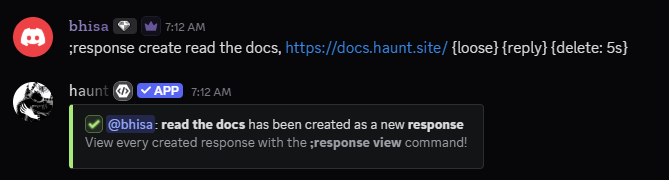
;prefix set [character]to change the prefix for your server.Creating a new response trigger
Get started by using theresponse create command.
What flags can I use with responders
Here are the flags that are available for creating responsesLoose Match
Loose Match
The
For example, if the trigger is
{loose} flag will search for the trigger anywhere in the message.For example, if the trigger is
bhisa, haunt will respond to bhisa is cool.Replying to a trigger
Replying to a trigger
The
{reply} flag will reply to the trigger message.Automatically delete the response
Automatically delete the response
The
{delete} flag will delete the response after a certain amount of time.To use the delete flag you HAVE to provide a time frame, Example:
{duration: 10s}Delete an existing response trigger
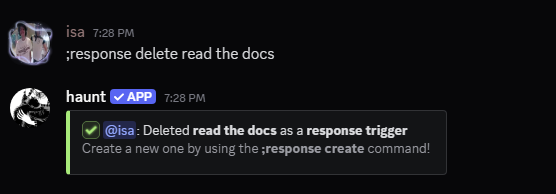
Delete an existing response trigger by using theresponse delete command.
View every existing response trigger
Remove every existing response
Update an existing response trigger
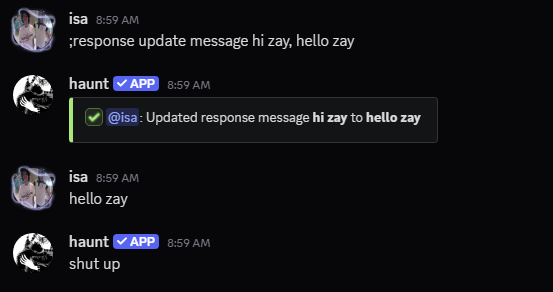
Here are the following subcommands to update settings for a response trigger.Message
Message
This command will update the message which triggers the response.
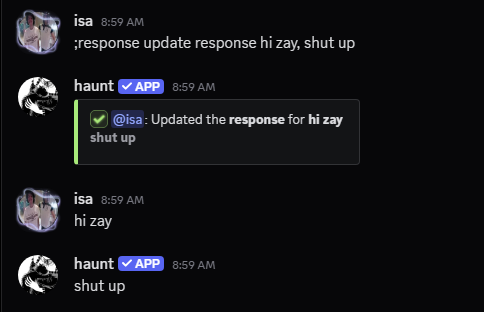
Response
Response
This command will update the response that sends when it’s triggered.
Loose
Loose
This command updates the loose setting for the response.
Cooldown
Cooldown
This command updates the cooldown setting for the response.
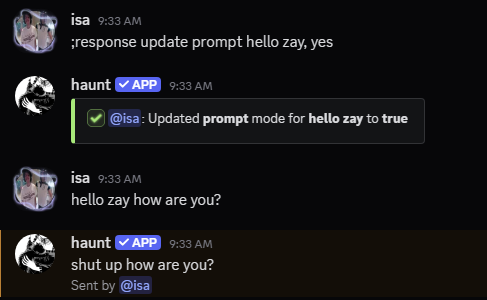
Prompt
Prompt
This command updates the prompt setting for the response.
Turning on the prompt setting repeats what you say after triggering the response.
Delete
Delete
This command deletes the response that gets sent.
Delete Trigger
Delete Trigger
This command will delete the message that triggered the response.
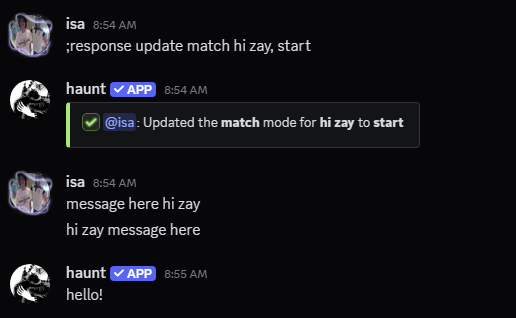
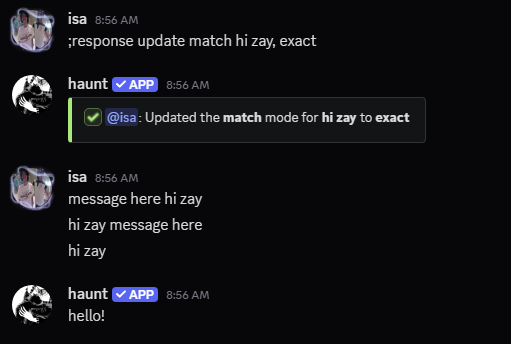
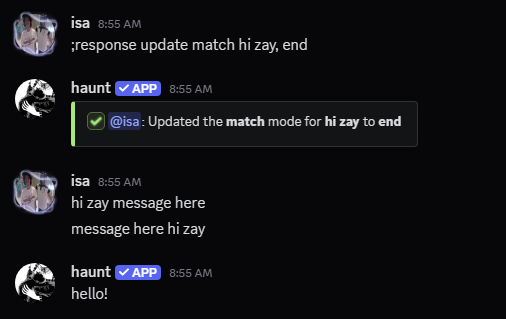
Match
Match
This command updates the match setting for the message.
Start means the message trigger has to be at the start of the message.
Restrict a response to a role
Start by using theresponse role command.
Remove a response from a restricted role
Remove a response from a restricted role
View the respones restricted to roles
View the respones restricted to roles
Clear every response restricted to a role
Clear every response restricted to a role
Restrict a response to a channel
Start by using theresponse channel command.
Remove a response from a restricted channel
Remove a response from a restricted channel
View the respones restricted to channels
View the respones restricted to channels
Clear every response restricted to a channel
Clear every response restricted to a channel
What else can I do?
You can also entirely ignore amember, role or channel from triggering responses.Ignore a member
Remove a member from being ignored
Remove a member from being ignored
View every member being ignored
View every member being ignored
Clear every member being ignored
Clear every member being ignored
Ignore a role
Remove a role from being ignored
Remove a role from being ignored
View every role being ignored
View every role being ignored
Clear every role being ignored
Clear every role being ignored
Ignore a channel
Remove a channel from being ignored
Remove a channel from being ignored
View every channel being ignored
View every channel being ignored
Clear every channel being ignored
Clear every channel being ignored